


MāKRS Stain Pad vs Rag: Which Is Better for Applying Wood Stain and Clear Finishes?
May 26th 2026
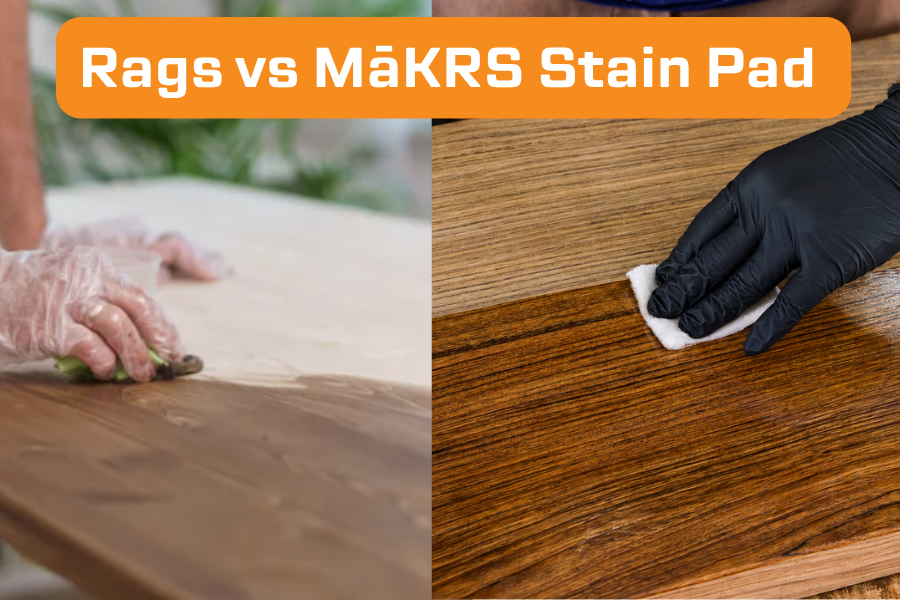
When applying wood stain or clear finishes like oils or polyurethane, many people still reach for a rag.
It’s quick, familiar, and easy to grab—but it’s also one of the most inconsistent ways to apply a finish.
Rags are designed to absorb, disperse, and hold—not release.
If you want smoother results, better control, and less mess, it’s worth comparing a traditional rag to a
purpose-built solution: a stain pad designed for wood finishing.
The Inherent Problem with Using Rags for Wood Stain and Finishes
Rags were designed to absorb liquid, disperse it through their fibers, and hold it through capillary
action and fiber wetting. They were never designed to release that liquid once absorbed.
Using a rag to apply finish is using it opposite of its intended function.
To get a rag to release finish, you’re forced into two failure modes:
1. Oversaturation:
You load more finish than the rag can hold. Once overloaded, it starts to give finish back—but not
evenly. That excess has nowhere to go, which leads to dripping, puddling, and heavy spots on the
surface.
2. Pressure:
You force finish out of the rag by pressing it into the wood. But release only happens where pressure is
applied, so the result is uneven—streaks, lap marks, and inconsistent coverage.
In both cases, you’re not controlling the application—the material is.
These aren’t technique issues—they’re structural limitations of the material.
That’s what creates poor results and leads to issues that show up fast, especially on visible surfaces like
furniture and cabinets.
Common Problems with Rags
•Uneven application of stain or finish
•Lint and fibers left behind in clear coats
•Inconsistent pressure from folding and bunching
•Over-absorption, wasting stain or polyurethane
•Messy handling with finish soaking through to your hands
These issues become even more noticeable when applying clear finishes, where every streak, fiber, or
imperfection is visible once it dries.
That’s the problem. Here’s the solution. Instead of forcing a material to behave differently than intended, use a tool designed for
the job.
Why the MāKRS Stain Pad Works Better
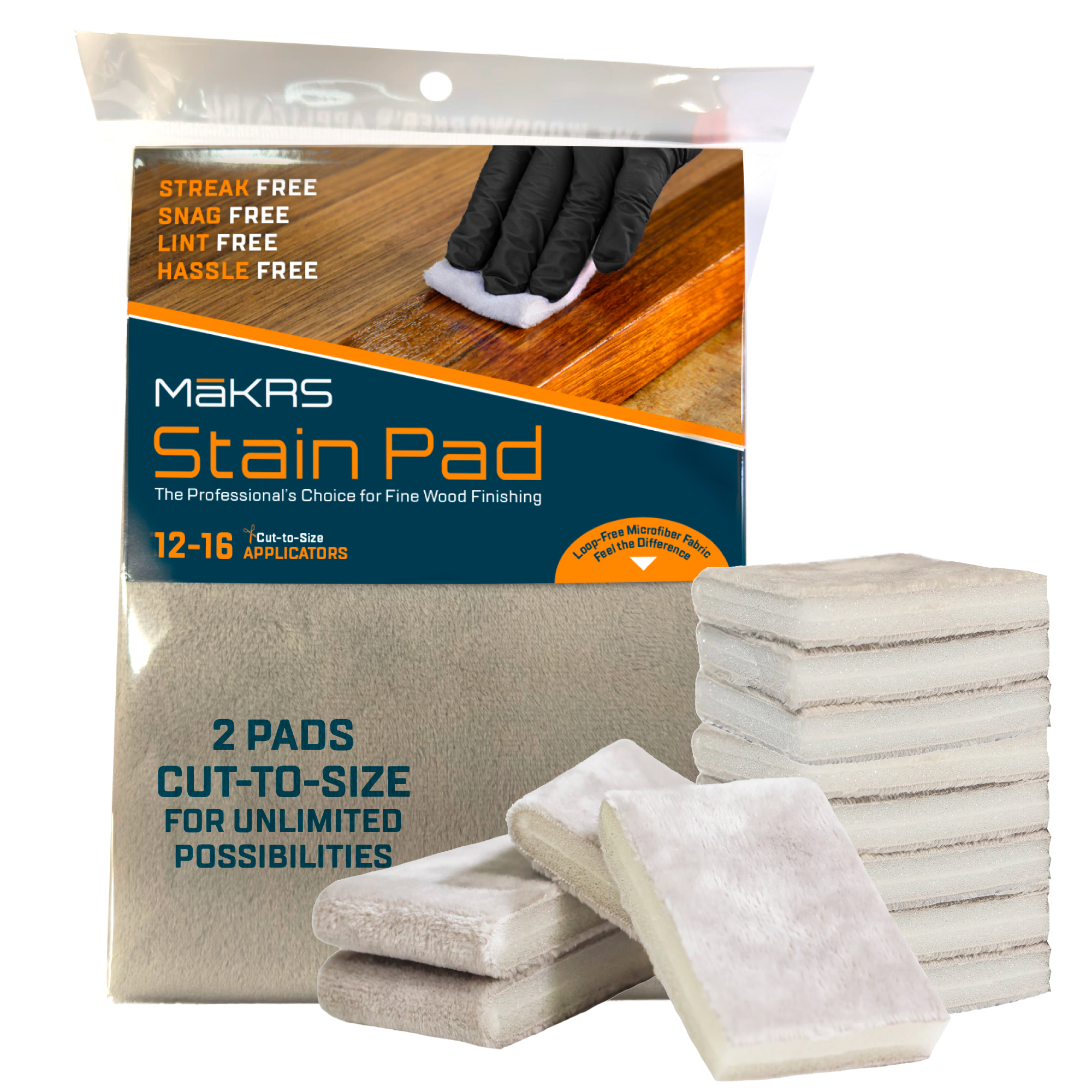
A stain pad is designed specifically to temporarily hold liquid and release it evenly.
It’s made from polyurethane foam with an engineered pore structure—defined by both porosity (the
size and volume of the holding chambers) and permeability (how easily liquid moves through them).
Together, these control how finish is held within the pad and how it flows back out during application.
Between the two layers is a barrier that limits how deep the finish can migrate. Instead of disappearing
into the tool, the finish stays near the working surface where it can be applied. This creates a functional
imbalance between the two sides: one side stays more loaded for application, while the other remains
drier for leveling and smoothing.
Unlike a rag, the pad is built to load, hold, and release finish toward the wood—without
oversaturation or forced pressure.
This creates three built-in advantages:
1. Controlled loading
The pad holds finish within its pore structure without becoming overloaded. There’s no need to flood
the applicator to get it to work, so you avoid dripping, puddling, and excess buildup from the start.
2. Even delivery
Finish is released evenly across the working surface of the pad—not just where pressure is applied.
That means consistent coverage, fewer streaks, and a smoother final result.
3. Dual-sided use
Because of the pads center barrier, it loads unevenly by design, so you can apply finish with the more
saturated side, then use the drier side to level and smooth the surface without adding more finish.
Apply with one side. Wipe smooth with the other.
Additional Advantages Rags Can’t Match
1. Cut-to-size flexibility
A stain pad can be cut to the exact size you need. With a rag, the only way to size it down is to fold
it—making it thicker, less predictable, and harder to control. Instead of gaining precision, you lose it.
2. Lint-free application
Rags shed fibers. Those fibers get trapped in stain and become highly visible in clear finishes. Stain
pads use loopless microfiber for a clean, lint-free finish.
3. Higher capacity when you need it
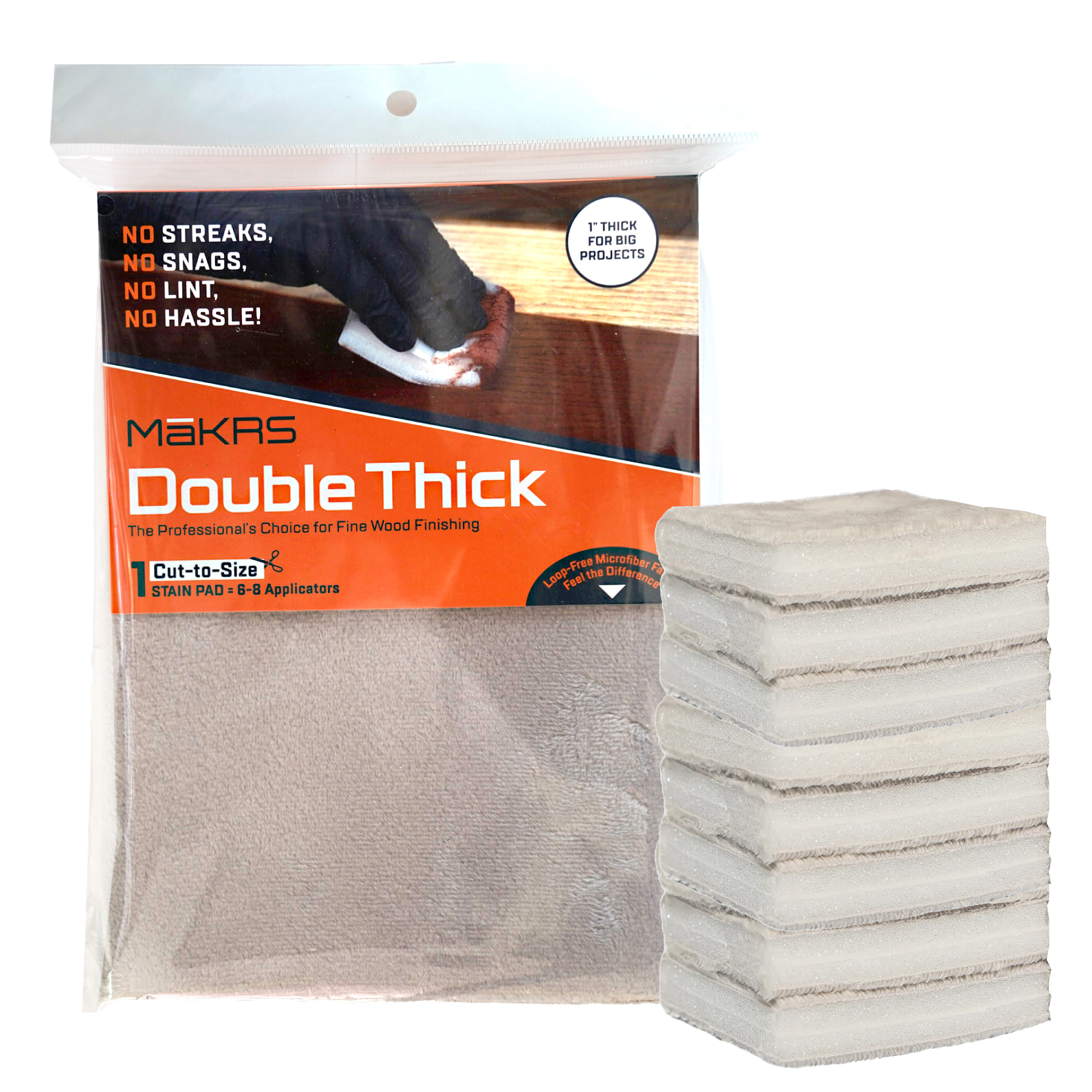
For larger surfaces, the MāKRS Stain Pad Double Thick holds more finish within its structure. That
means fewer reloads, more consistent coverage, and faster application—without losing control.
MaKRS Stain Pad vs Rag: Side-by-Side Comparison

A Better Way to Apply Wood Finishes
Using a rag is convenient—but it comes with tradeoffs in quality, consistency, and control.
MaKRS stain pad is designed to improve the entire finishing process: cleaner application, more
consistent results, greater precision, and better performance with both stain and clear coats.
It’s not just an alternative—it’s the right tool for the job.
Upgrade Your Finishing Process
If you’re tired of uneven stain, lint in your clear coat, or constantly fighting with rags, switching tools
makes an immediate difference.
Try a cut-to-size microfiber stain pad:
